
Loc Dang 16 Oct 2026
What to Do After a Motorcycle Accident in Texas?
A motorcycle crash can happen in an instant, leaving a rider with injuries, property damage, and difficult questions about what to do next. Because motorcycles provide less physical protection than passenger vehicles, a collision can result in serious injuries. Fault should still be evaluated from the evidence, not assumptions about the rider.
Texas law allows injured riders to pursue compensation when another party is legally responsible. What you do in the first hours and days after the crash can affect both your health and the evidence available for a claim. If you were hurt in an Austin motorcycle crash, the steps below are where that evidence starts.
What Should You Do After a Motorcycle Accident in Texas?
Short answer
Get to safety, call 911, request medical help, and report the crash to law enforcement. If you can do so safely, gather the other driver’s information, photograph the scene, and get witness contacts. Avoid guessing about fault or giving a recorded statement before you understand your rights.
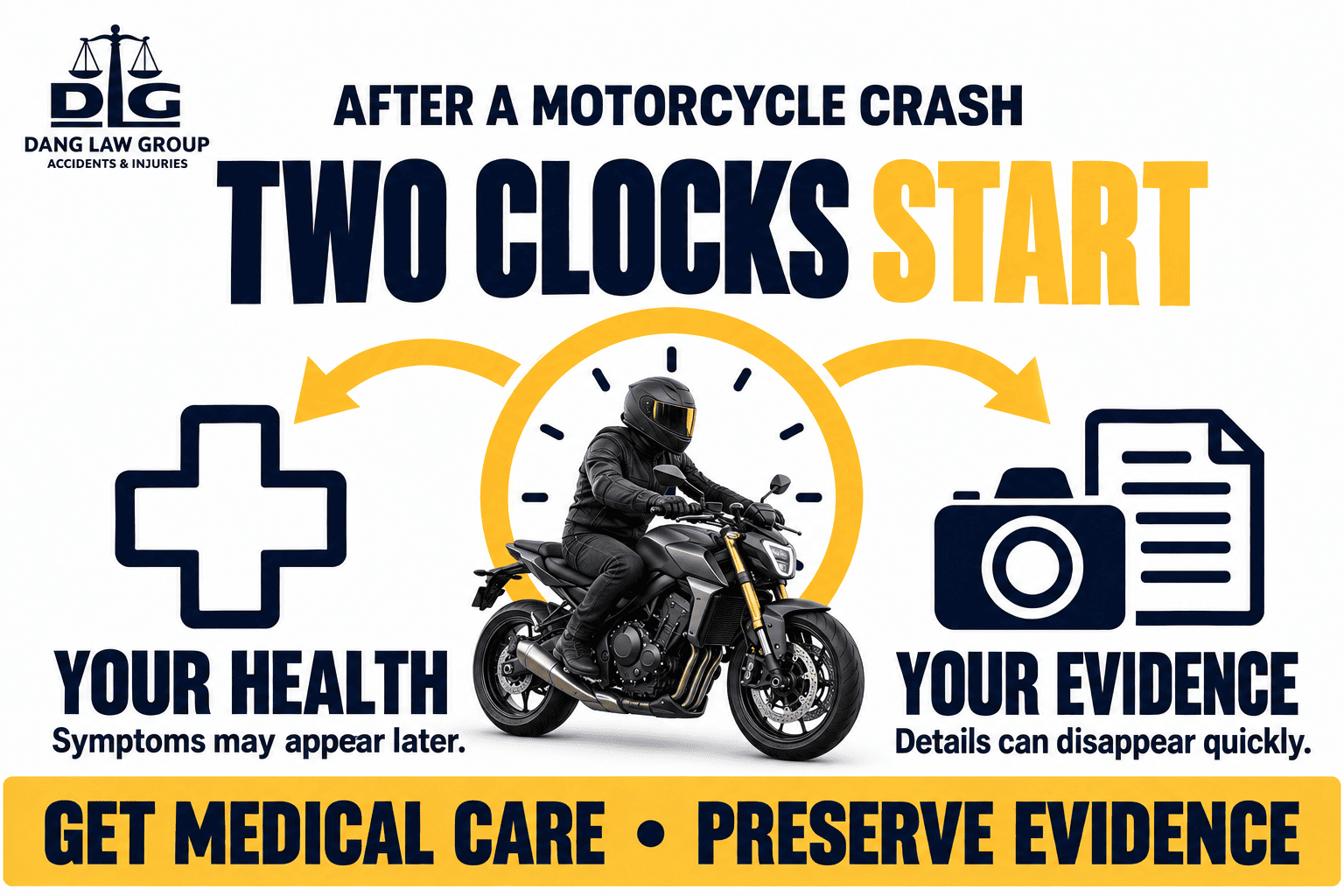
Some injuries may not be immediately apparent after a motorcycle crash. Prompt medical attention and careful scene documentation can help protect your health and preserve evidence relevant to a later claim. Because Texas uses proportionate-responsibility rules, what you gather after the crash can affect how fault and recovery are evaluated.
What to Do at the Scene and Afterward
- Get to safety and call 911Move out of traffic if you safely can, and request police and medical help. If officers prepare a crash report, it can provide an official record of the incident and the information gathered at the scene.
- Get medical attention promptlySome injuries, including concussions or internal injuries, may not cause obvious symptoms right away. Medical records also document your symptoms and treatment after the crash.
- Exchange and record informationGet the driver’s name, license, insurance, and plate number, plus contact details for any witnesses.
- Document everythingPhotograph the vehicles, your motorcycle, the road, skid marks, traffic signals, and your gear and injuries.
- Preserve your gearKeep your helmet and riding gear as they are. Damage to them can show the force of the impact.
- Watch what you sayDo not apologize or speculate about fault, and be cautious before giving the other insurer a recorded statement.
Why Medical Care Comes First, Even If You Feel Fine
Some riders feel well enough to leave the scene even when an injury has not yet become obvious. A delay in treatment can also become an issue if an insurer later disputes whether the crash caused or worsened the injury. Prompt medical care addresses both concerns, and medical records document symptoms, diagnoses, and treatment after the collision.
How Fault Works in a Texas Motorcycle Accident
Texas comparative fault rules are addressed through proportionate responsibility under Chapter 33 of the Civil Practice and Remedies Code. If you are assigned 50 percent or less of the responsibility, your recovery is generally reduced by that percentage. If you are more than 50 percent responsible, you generally cannot recover.
When fault is disputed, insurers may examine speed, lane position, visibility, traffic signals, and the conduct of both the rider and the other driver. Documentation matters most in exactly these situations. Photos, witness statements, vehicle damage, traffic-camera footage, and evidence that a driver turned across the rider’s path or failed to yield may help establish what happened. We explain the allocation of responsibility in more detail in our guide to Texas comparative fault.
Does Not Wearing a Helmet Hurt Your Claim?
Texas Transportation Code Section 661.003 addresses protective headgear requirements and includes limited statutory exceptions for certain riders age 21 or older. Because those exceptions have specific legal conditions, whether a rider qualifies should be evaluated from the statute and the rider’s circumstances.
Not wearing a helmet does not automatically determine who caused the collision. Helmet use may still become relevant to disputed injury or damages issues depending on the facts. For more detail on the statutory requirements and exceptions, see our guide to the Texas motorcycle helmet law. If lane position or riding between lanes is an issue, our explainer on Texas lane splitting laws provides additional context.

If you have suffered injuries, call Attorney Dang to give the insurance companies a Bang!

Common Mistakes After a Motorcycle Crash
A few decisions made early can quietly weaken a rider’s claim:
- Skipping medical care because you initially feel okay. Some injuries may have delayed symptoms, and a delay in treatment can become an issue if an insurer later disputes causation or severity.
- Admitting or guessing about fault at the scene. Avoid statements that could be interpreted as accepting responsibility when you may not yet know all the facts.
- Giving the other insurer a recorded statement too early. A recorded statement becomes part of the claim file, so avoid guessing about fault, symptoms, or details you do not clearly remember.
- Accepting an offer before the full extent of the injury is clear. An early settlement may not account for future treatment, lasting impairment, or other documented losses.
- Repairing or discarding the motorcycle too soon. It may be evidence of how the crash happened.
When injuries are serious or fault is disputed, our Austin motorcycle accident lawyers can help preserve evidence, identify potentially available insurance coverage, address disputed fault issues, and pursue compensation supported by the facts and applicable law.
Frequently Asked Questions
How long do I have to file a lawsuit after a motorcycle crash in Texas?
Texas generally provides a two-year limitations period for filing a personal injury lawsuit after a crash, subject to exceptions that may affect the deadline. Acting sooner can also help preserve evidence.
Does the other driver’s insurance pay to repair my motorcycle?
Potentially. If the other driver is legally responsible, property-damage liability coverage may pay for motorcycle damage, while bodily-injury coverage may address injury-related losses. What is actually paid depends on policy limits and the facts of the crash.
What if the driver who hit me had no insurance?
Your own uninsured or underinsured motorist coverage may apply, depending on your policy and the circumstances. UM coverage may also be relevant in a hit-and-run, subject to policy terms and applicable requirements.
Key takeaways
- After a motorcycle crash in Texas, call 911, get medical care promptly, and document the scene before leaving.
- Some motorcycle-crash injuries may not cause obvious symptoms immediately, so prompt medical attention helps protect your health and document treatment after the collision.
- Under Texas proportionate-responsibility rules, recovery is generally reduced by your percentage of responsibility, and a claimant who is more than 50 percent responsible generally cannot recover.
- Texas Transportation Code Section 661.003 includes limited helmet exceptions for certain riders age 21 or older, and helmet use does not automatically determine who caused the collision.
- Texas generally provides a two-year limitations period for filing a personal injury lawsuit after a crash, subject to exceptions.
- Statements about fault or an early recorded statement become part of the insurer’s claim evaluation, so avoid guessing about facts you do not clearly remember.
Legal sources
- Texas Transportation Code, Chapter 661 (Protective Headgear, including § 661.003).
- Texas Civil Practice and Remedies Code, Chapter 33 (Proportionate Responsibility).
- Texas Civil Practice and Remedies Code § 16.003 (two-year limitations period).
Injured in a Motorcycle Crash in Austin? Talk to Dang Law Group
A motorcycle crash can leave you with serious injuries, medical bills, property damage, and difficult questions about fault and insurance.
At Dang Law Group, we help injured riders in Austin preserve evidence, identify potentially available coverage, address disputed fault issues, and pursue compensation supported by the facts and applicable law. Reach out to discuss your options.
Information verified by lawyer Loc Dang
Loc Dang is a founder and member of our legal team. In this blog, Attorney Dang shares his expertise to guide accident victims.
CONTACT US
Where are we?
North Austin: 11442 N Interstate Hwy 35, Austin, TX 78753.South Austin: 2512 South IH 35, Suite 250, Austin TX 78704
You can contact us 24 hours a day if you have been in an accident and need legal help to fight for the maximum compensation you are legally entitled to. If you fill out this form , someone from our team will contact you.
 9 to 5pm
 512-973-8997
